Exploring the World of Blackjack with NUSTAR
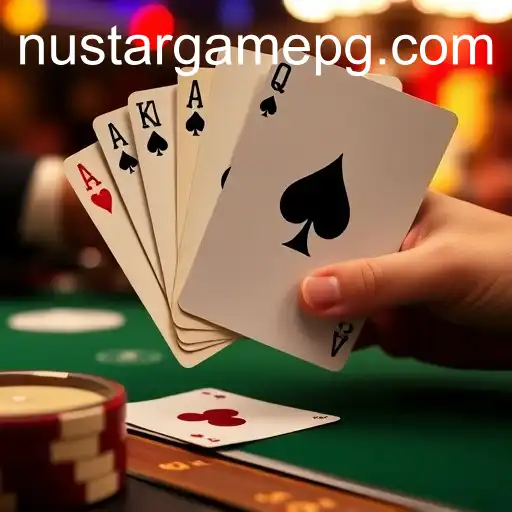
Blackjack, often regarded as one of the most popular casino games around the world, fascinates gamblers and casual players alike. With its perfect blend of skill, strategy, and chance, blackjack has enamored audiences since its inception. This card game not only offers thrilling gameplay but also provides unique mathematical challenges for those wishing to delve deeper. In this enriched exploration, we examine how blackjack and the NUSTAR research initiatives can intersect in fascinating ways.
Understanding Blackjack: More Than Just a Game
Originating from the family of banking games, blackjack finds its roots in early 17th-century card games such as "twenty-one." Over the centuries, it has evolved to become the staple feature in most casinos, be it in the bright lights of Las Vegas or the more humble local establishments across different regions. The primary objective of blackjack is simple: beat the dealer by having a hand value higher than the dealer's without exceeding 21.
The game begins with players placing their bets, followed by the dealer distributing two cards to each participant. With strategic decisions like "hit," "stand," "double down," or "split," players must navigate the nuances of card values and probabilities. Herein lies the mix of chance and skill that makes blackjack irresistibly engaging.
NUSTAR: A Visionary Collaboration of Science
NUSTAR (Nuclear Structure, Astrophysics, and Reactions) represents a groundbreaking research collaboration focused on understanding the fundamental properties of atomic nuclei. Through various international projects and state-of-the-art technology, NUSTAR is dedicated to advancing our comprehension of nuclear matter under extreme conditions, revealing the mysteries tucked away in the atomic world.
Given how both blackjack and NUSTAR require an appreciation for probabilities and calculations, the intersection of these two fields offers intriguing possibilities for both scientists and gaming enthusiasts. Recognizing patterns, understanding odds, and predicting outcomes are skills prevalent in both the dynamic table of blackjack and the static laboratories of NUSTAR research.
Strategy and Probability: Connecting Blackjack and NUSTAR
The bridge between blackjack and NUSTAR is founded upon the principal theorem of probability and statistical analysis. In blackjack, players invest considerable effort to master strategies that increase their chances of winning against the house. Basic strategy charts, card counting, and statistical analysis are tools often employed by players desiring to maximize their competitive edge.
Similarly, NUSTAR projects depend heavily on predictive models, data analysis, and an understanding of nuclear decay processes, necessitating impeccable precision and rigorous interpretation of results. Much like a seasoned blackjack player, NUSTAR scientists cultivate a comprehensive understanding of their field, predicting and deducing outcomes from complex data sets.
Blackjack Strategy
The core principle of any blackjack strategy revolves around reducing the house edge. Beginners often start with the basic strategy chart, which provides a statistically optimal strategy for any given hand against the dealer’s visible card. By adhering to this chart, players can systematically decrease the casino advantage to a minimum.
Advanced enthusiasts may further employ card counting techniques, monitoring the distribution of high and low cards in play to shift the odds in their favor. Although this requires great skill and practice, proficient card counters can potentially turn the odds, transforming blackjack into a game of near skill rather than chance alone.
NUSTAR Techniques
While less concerned with the world of cards and dealers, NUSTAR operates on similar principles of strategic prediction and probability modeling. Employing cutting-edge equipment such as particle accelerators, gamma spectrometers, and advanced computing systems, NUSTAR researchers track and analyze nuclear interactions with unmatched rigor. Experiments and calculations in nuclear physics necessitate precise strategies to deduce unknown nuclear reactions and structures from observable data.
Through simulations and meticulous data analyses, scientists at NUSTAR use the principles of probability to hypothesize, test, and ultimately uncover the hidden complexities of nuclear matter. The strategic similarities between the relentless precision of an experimenter and the tactical calculations of a blackjack strategizer illustrate a surprising yet profound cross-disciplinary resonance.
The Future Ahead: Blackjack Meets Science
While blackjack and NUSTAR operate worlds apart physically, the connections in their methodological foundations speak to a universal love for unraveling complexities—be it predicting the turn of a card or deciphering the orchestration of atomic particles. With the collaboration of these distinct yet interconnected systems, the possibilities of learning are boundless.
The mathematics backbone, which underlies both blackjack and NUSTAR, epitomizes the central importance of analytical problem-solving irrespective of traditional boundaries. As research evolves and players continuously refine their stratagems, it becomes abundantly clear that our understanding, whether on the casino floor or in the laboratory, is ever-expanding.